

How Intimacy Coordinators Help Actors Feel Safe and Confident During Intimate Scenes
Filming a kiss, a love scene, or a moment of simulated sex might look effortless on screen, but behind the camera it demands careful planning, clear communication, and genuine trust. An intimacy coordinator is a trained professional who serves as an advocate, liaison, and movement choreographer for scenes involving nudity, simulated sex, and other hyper-exposed work. Since SAG-AFTRA released its first industry Standards and Protocols for the Use of Intimacy Coordinators in 2020, the role has grown from a niche position into a recognized pillar of on-set safety. Here is exactly how these professionals ensure every actor feels comfortable and confident.
Pre-Production Boundary Conversations
Long before cameras roll, an intimacy coordinator meets one-on-one with each performer. According to SAG-AFTRA protocols, the coordinator meets with the executive producer, writer, and director to discuss the script breakdown, degree of nudity, and specifics of simulated sex. They then confirm consent with every actor individually.
Intimacy coordinator Marci Liroff describes creating "a space where they can say no and let them understand that their no is very powerful and that it needs no explanation." These early conversations establish trust so actors can articulate their needs clearly before stepping on set. Productions that know when to hire an intimacy coordinator bring the IC on board during pre-production, just as they would a stunt coordinator.
Choreographing Intimate Scenes
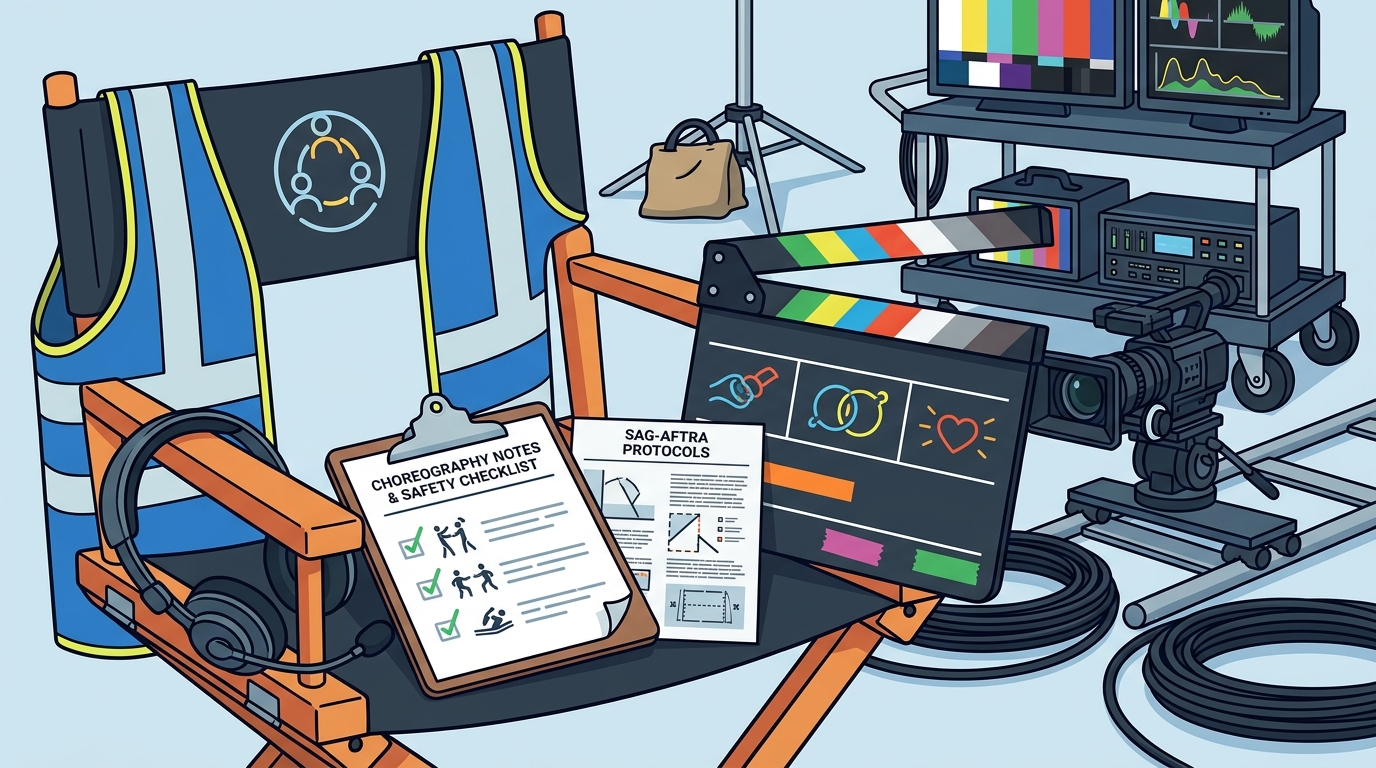
Intimacy choreography is the structured, repeatable blocking of physical contact in a scene, comparable to fight choreography for action sequences. The coordinator works with the director to map every touch, angle, and movement so that nothing is left to chance.
Why Choreography Builds Confidence
When actors know the precise sequence of physical actions, they can commit fully to their performance. As the New York Film Academy notes, once the appropriate setting is established, actors have a structure in which to perform in a way they know is safe. CINTIMA's certification framework dedicates an entire module to choreography in intimacy coordination, including an in-person workshop in Los Angeles.
Modesty Garments and Physical Barriers
A modesty garment is any protective clothing or barrier worn by an actor during intimate scenes to limit skin-to-skin contact while remaining invisible to the camera. Coordinators work closely with wardrobe to select padding, adhesive coverings, and other protective pieces tailored to each scene.
| Barrier Type | Common Use | Visibility on Camera |
|---|---|---|
| Modesty patch or strapless thong | Simulated sex scenes | Hidden by camera angles |
| Silicone adhesive covers | Nude scenes requiring chest exposure | Removed in post or hidden |
| Dance belt or genital guard | Male performers in close-contact scenes | Hidden |
| Robe or cover-up | Between takes to maintain dignity | Not filmed |
The right wardrobe can make actors feel shielded rather than exposed. Learn more about how these tools work in CINTIMA's guide to modesty garments and barriers.
Consent Check-Ins and Safe Signals
Consent on set is not a one-time event. It is an ongoing, revocable agreement that the intimacy coordinator monitors throughout every rehearsal and take. Coordinators often establish discreet signals that actors can use if something feels off, allowing performers to pause filming without publicly announcing discomfort.
These signals empower actors to self-advocate without breaking character. Regular check-ins between takes confirm that boundaries still hold and that performers remain comfortable. CINTIMA's blog on what consent looks like on set and the FRIES model of consent explore these frameworks in depth.
Emotional Safety and Decompression
Filming intimate scenes can be emotionally draining, especially when they involve vulnerability or trauma. Coordinators help actors decompress afterward by offering grounding exercises, breathing work, or emotional distancing techniques.
Techniques Used on Major Productions
On Bridgerton, intimacy coordinator Lizzy Talbot brought yoga mats and large stress balls so actors could decompress between takes. Another common technique is physically changing one's appearance after a scene, such as removing a wig, to create separation from the character. These practices protect mental health and prevent performers from carrying heavy energy into their next scenes. For more on this topic, explore CINTIMA's resources on mental health and the 5 C's for intimacy coordinators.
SAG-AFTRA Standards and the New Union Agreement
The regulatory landscape for intimacy coordination has shifted dramatically. SAG-AFTRA's 2023 contract requires producers to use "best efforts" to hire an intimacy coordinator for scenes involving nudity or simulated sex. In 2024, the union released updated Standards and Protocols formalizing how productions must handle hyper-exposed work.
The milestone came in late 2025 when SAG-AFTRA ratified the first-ever collective bargaining agreement covering intimacy coordinators on scripted television, theatrical, and streaming productions. The agreement took effect February 22, 2026 for new pictures. CINTIMA covered this landmark in their analysis of the first intimacy coordinator agreement.
How Intimacy Coordinators Are Trained
Becoming a certified intimacy coordinator requires rigorous training. SAG-AFTRA's accreditation program mandates a minimum of 75 hours of instruction, and lead trainers must have at least 200 days of on-set experience on SAG-AFTRA productions.
CINTIMA's SAG-AFTRA Accredited Program
CINTIMA is a SAG-AFTRA accredited training organization offering an online, on-demand program open to international students. The first three modules are completed online, covering topics from consent frameworks to trauma-informed practices. The fourth module is an in-person choreography workshop held in Los Angeles. Graduates join a growing network of certified intimacy professionals working on productions worldwide.
Key Takeaways
- Intimacy coordinators hold pre-production boundary conversations so actors can voice their limits before filming begins.
- Choreography gives performers a structured, repeatable sequence of movements that replaces uncertainty with confidence.
- Modesty garments and physical barriers protect dignity while remaining invisible on camera.
- Ongoing consent check-ins and discreet safe signals let actors pause a scene without public discomfort.
- Decompression techniques like grounding exercises safeguard emotional well-being between takes.
- SAG-AFTRA's 2026 collective bargaining agreement makes intimacy coordination a formally recognized, unionized role.
- Accredited training programs like CINTIMA prepare professionals with at least 75 hours of instruction and hands-on choreography workshops.
Frequently Asked Questions
What exactly does an intimacy coordinator do?
An intimacy coordinator is an advocate and liaison between actors and production who also serves as a movement coach and choreographer for scenes involving nudity, simulated sex, and other hyper-exposed work. They ensure informed consent and adherence to safety protocols throughout the entire production process.
When should a production hire an intimacy coordinator?
SAG-AFTRA recommends hiring an intimacy coordinator for any scene involving nudity or simulated sex. The coordinator should come on board during pre-production, just as you would a fight or stunt coordinator.
How do intimacy coordinators handle consent on set?
Consent is treated as an ongoing process. Coordinators meet one-on-one with performers before rehearsals, confirm boundaries, establish discreet safe signals, and perform regular check-ins between takes to ensure consent remains active.
What are modesty garments?
Modesty garments are protective clothing items and barriers, such as adhesive patches, dance belts, or strapless coverings, worn by actors during intimate scenes. They limit unwanted skin-to-skin contact and are designed to stay hidden from the camera.
Do intimacy coordinators limit creative freedom?
No. The role exists to support the director's vision, not suppress it. By establishing clear boundaries, coordinators actually unlock more creative freedom because actors can perform fully within a structure they trust.
Is intimacy coordination required by SAG-AFTRA?
The 2023 SAG-AFTRA contract requires producers to make a good-faith, "best efforts" attempt to hire an intimacy coordinator for scenes with nudity or simulated sex. The 2025 Intimacy Coordinator Agreement, effective February 2026, further formalizes the role with union protections.
How do I become a certified intimacy coordinator?
You need training from an accredited program that meets SAG-AFTRA's minimum 75-hour requirement. CINTIMA offers a SAG-AFTRA accredited certification program with online modules and an in-person Los Angeles workshop. Visit the CINTIMA courses page to get started.
Can international students train as intimacy coordinators?
Yes. CINTIMA's program is online and on-demand, making it accessible to international students. Only the final choreography module requires travel to Los Angeles.
Start Your Journey in Intimacy Coordination
The demand for qualified intimacy coordinators is growing faster than ever, driven by new union agreements and an industry-wide commitment to safer sets. If you are ready to build a career that protects performers and elevates storytelling, explore CINTIMA's SAG-AFTRA accredited certification program today.