

Intimacy Coordinator Training Cost: A Full Breakdown for 2026
Intimacy coordination is one of the fastest-growing careers in film and television, yet one of the most common questions aspiring professionals ask is simple: how much does it actually cost to get trained and certified? The answer depends on the type of program, its accreditation status, delivery format, and what is included beyond core coursework. Costs can range from a few thousand dollars for focused online certification tracks to nearly $13,000 for graduate-level university programs. This guide breaks down every major cost factor so you can make an informed investment in your career.
What Is an Intimacy Coordinator?
An intimacy coordinator is an advocate, liaison, and movement choreographer who ensures scenes involving nudity, simulated sex, and other hyper-exposed content are performed safely and consensually on film and television sets. According to SAG-AFTRA's Standards and Protocols, intimacy coordinators work closely with production personnel to realize a director's vision while promoting adherence to safety-related terms and conditions.
The role has grown rapidly since the #MeToo movement, and demand is accelerating. The SAG-AFTRA Intimacy Coordinator Agreement, ratified in late 2025, is the first-ever collective bargaining agreement covering intimacy coordinators on scripted television, theatrical, and streaming productions. It went into effect February 22, 2026 for new productions, signaling that trained, certified professionals are now more essential than ever.
Why Training Costs Vary So Much
Not all intimacy coordinator training programs are created equal. Price differences come down to several factors:
Delivery Format
Some programs are entirely online and self-paced, which reduces overhead and cost. Others require in-person workshops or operate on a cohort-based schedule with live instruction, which typically increases the price.
Accreditation Status
SAG-AFTRA accreditation is the recognized standard for intimacy coordinator training in film and television. Programs that meet these minimum training standards invest in rigorous curriculum, qualified instructors, and equity initiatives, all of which factor into cost.
Scope of Training
A certification program is a comprehensive pathway that covers everything from consent frameworks and trauma-informed care to on-set choreography and mentorship. A standalone workshop or introductory course covers far less ground and costs far less as a result.
Program-by-Program Cost Comparison
Below is a comparison of the major intimacy coordinator training pathways available in 2026. Note that some programs do not publicly list exact tuition; where that is the case, we note what is known about structure and payment options.
| Program | Accreditation | Format | Approximate Cost | Key Details |
|---|---|---|---|---|
| CINTIMA | SAG-AFTRA accredited | Online + in-person LA workshop | Contact for pricing; flexible payment plans available | 4 modules + certification stage; on-demand online learning; lifetime access; mentorship included |
| DePaul University IPTC | Graduate certificate (Dept. of Education approved) | Hybrid (online + in-person) | $12,960 (24 credits at $540/credit) | Graduate-level; federal financial aid eligible; 30-week program |
| IDC Professionals | SAG-AFTRA accredited | Online + in-person choreography workshop | Accelerator: $2,997; full certification: contact for pricing | Covers both intimacy direction (theatre) and coordination (film/TV) |
| IPA (Intimacy Professionals Association) | SAG-AFTRA accredited | Live online (Zoom) + in-person workshop | Contact for pricing; payment plans and work-study available | 17-week cohort; selective admission; small class sizes |
CINTIMA stands out for its flexibility. The program is online and on-demand, meaning trainees can begin at any time and learn at their own pace. The full certification bundle includes Modules I through the Certification Stage, and trainees can also start with Module I individually before committing to the complete pathway.
Hidden and Additional Costs to Budget For
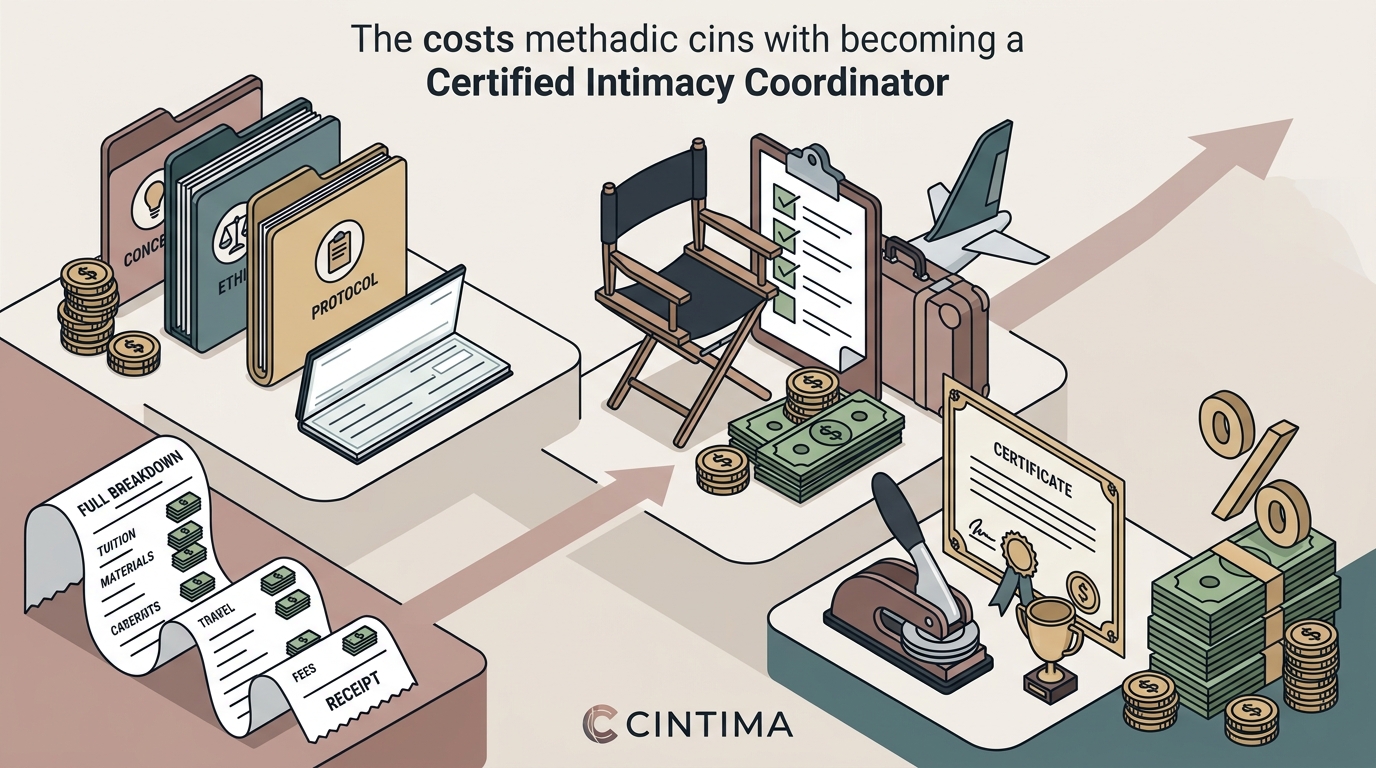
Tuition alone does not tell the full story. Here are additional expenses to plan for when budgeting your training investment:
Travel and Accommodation
Most certification programs require an in-person choreography workshop component. CINTIMA holds its Module IV workshop in Los Angeles, typically a four-day immersive experience. If you are traveling from out of state or internationally, flights, lodging, and meals will add to your total investment.
Supplementary Certifications
Mental Health First Aid certification is a requirement for working intimacy coordinators. CINTIMA offers this as a standalone course through a National Council for Mental Well-Being certified training tailored to the entertainment industry. Some programs include this in tuition; others charge separately.
On-Set Experience
Before advancing to Module III at CINTIMA, trainees must provide proof of a minimum of 10 days working on a professional film or television production. Gaining that experience may involve unpaid or low-paid work on independent sets.
Scholarships, Payment Plans, and Financial Aid
Cost should not be the barrier that keeps the field from diversifying. Most established programs offer financial support:
CINTIMA offers multiple flexible payment options for its certification bundle, including 3-month installment plans, 6-month installment plans, one-time payment, and Klarna financing. The program also has a 14-day money-back guarantee. For students from underrepresented backgrounds, CINTIMA's Global Majority Scholarship offers 50% off the full certification cost for those who identify as Black, Indigenous, or people of color.
DePaul's IPTC program is eligible for federal student aid through FAFSA, including Federal Graduate PLUS loans. IDC Professionals offers its own scholarship program, and IPA provides work-study positions that prioritize applicants from diverse backgrounds.
Why SAG-AFTRA Accreditation Matters
SAG-AFTRA accreditation is the industry benchmark that tells employers a training program meets established minimum standards for curriculum, trainer experience, and equity initiatives. The SAG-AFTRA Intimacy Coordinator Accreditation Program allows training programs to receive recognition from the union and helps candidates and employers identify qualified programs.
With the new Intimacy Coordinator Agreement now in effect, productions under AMPTP contracts must engage intimacy coordinators for covered work. Hiring from the SAG-AFTRA registry, which requires proof of accredited training, is becoming standard practice. Choosing a SAG-AFTRA accredited program like CINTIMA positions you for this growing pipeline of opportunities.
Return on Investment: Can Training Pay for Itself?
Intimacy coordination is a specialized, in-demand skill. The new SAG-AFTRA agreement establishes guaranteed daily and weekly minimum rates for intimacy coordinators, with overtime provisions for work exceeding 8 hours per day or 40 hours per week. Coordinators also gain access to the SAG-AFTRA Health Plan and pension contributions.
CINTIMA's own enrollment page frames the return directly: if you can book six days on a professional set, the course has paid for itself. Given that the 2023 SAG-AFTRA contract already required producers to use "best efforts" to hire an intimacy coordinator for scenes with nudity or simulated sex, demand is only increasing.
Professionals from diverse backgrounds are entering the field, including choreographers, mental health professionals, stunt coordinators, and production managers. If you are considering a career pivot, explore how to become an intimacy coordinator to understand the full pathway.
Key Takeaways
- Intimacy coordinator training costs range from approximately $3,000 to $13,000 depending on the program type and format.
- SAG-AFTRA accreditation is the industry gold standard; always verify a program's accreditation status before enrolling.
- Budget for additional costs such as travel to in-person workshops, Mental Health First Aid certification, and gaining on-set experience.
- Most reputable programs, including CINTIMA, offer payment plans, scholarships, and financing options to improve accessibility.
- The 2026 SAG-AFTRA Intimacy Coordinator Agreement guarantees minimum rates, health benefits, and pension contributions, making the career financially viable.
- CINTIMA's online, on-demand format with an in-person Los Angeles workshop offers flexibility for both domestic and international students.
- Demand for certified intimacy coordinators is growing as union contracts increasingly require their presence on set.
Frequently Asked Questions
How much does CINTIMA's intimacy coordinator certification cost?
CINTIMA offers its full certification bundle with flexible payment options including 3-month and 6-month installment plans, a one-time payment option, and Klarna financing. Contact CINTIMA or visit their courses page for current pricing. A Global Majority Scholarship providing 50% off is also available.
What is the cheapest way to become an intimacy coordinator?
Costs vary widely. Some accelerator-style programs start around $3,000, but a full certification pathway with SAG-AFTRA accreditation typically requires a larger investment. Starting with a single introductory module, as CINTIMA allows, lets you begin training at a lower entry point before committing to the full bundle.
Are intimacy coordinator training programs eligible for financial aid?
DePaul University's graduate certificate program is eligible for federal student aid through FAFSA. Private training programs like CINTIMA and IDC offer payment plans and scholarships instead of federal loans.
Do I need prior film experience to enroll in training?
CINTIMA does not require prior film experience to begin Module I. However, before advancing to Module III, trainees must document at least 10 days of work on a professional film or television production. Check CINTIMA's FAQ page for full prerequisite details.
Is SAG-AFTRA accreditation required to work as an intimacy coordinator?
It is not legally required, but it is the recognized industry standard. Productions hiring under SAG-AFTRA contracts increasingly seek coordinators from the union's registry, which requires proof of training from an accredited program.
How long does it take to complete intimacy coordinator certification?
Timelines vary by program. CINTIMA's self-paced, on-demand format lets trainees move through four modules and a certification stage on their own schedule. DePaul's program is designed for 30 weeks, and IPA's cohort runs 17 consecutive weeks plus a workshop.
Can international students enroll in intimacy coordinator training?
Yes. CINTIMA is specifically designed to be accessible to international students, with online, on-demand coursework and an in-person choreography workshop held in Los Angeles. Learn more on CINTIMA's About page.
What is the earning potential after certification?
The 2026 SAG-AFTRA Intimacy Coordinator Agreement establishes guaranteed daily and weekly minimum rates with annual increases, plus overtime provisions and access to SAG-AFTRA health and pension benefits. Exact rates depend on the production type and contract terms.
Ready to Invest in Your Career?
If you are serious about becoming a certified intimacy coordinator, the most important step is choosing a SAG-AFTRA accredited training program that fits your schedule, budget, and career goals. Explore CINTIMA's certification pathway or book a free discovery call with a CINTIMA instructor to discuss pricing, payment plans, and whether the program is right for you.